
Hello, I am Dr. Clara Feldman.
I am a General Dentist with over 20 years of experience practicing patient-centered care. The main fields of my expertise are Aesthetic Restorative Dentistry and Endodontics.
I focus on creating long-lasting restorations that look and function like natural teeth.
I received my degree in dentistry from Moscow State University of Medicine and Dentistry (MSUMD) in 1997.
In 1999, I completed an Oral and Maxillofacial Surgery Residency at MSUMD. In 2003, I received a Ph.D. in Oral Surgery.
I studied my Ph.D. research at Bristol University and Frenchay Hospital. Later on, my interest in science led me to collaborate with Dr. Domenico Ricucci.
From 2019 to 2021, I studied Regenerative Endodontics and the Clinical Management of Deep Caries Lesions at the Center of the Study of Pulp Biology in Cetraro, Italy.
I am passionate about achieving excellent aesthetic and functional results.
Since 2023, I have been taking annual courses in Aesthetic Dentistry at Geneva Smile Center in Switzerland.
I made Aliyah in 2022, and from 2022 to 2025, I worked at the K&J British Dental Office in Jerusalem.
In 2025, I joined Dr. Mickler Dental Office.
TREATMENTS
I make the quality of my care a priority. For this reason, my treatments generally take longer than the “norm.” Giving me your time allows me to take my treatment to a high medical and aesthetic level, remaining as close as possible to your needs and expectations.
I pride myself on taking the time to explain each procedure to my patients in as much detail as they require so they feel at ease before and throughout the treatment.
I perform all the treatments, including Professional Oral Hygiene procedures, using Zeiss magnifying lenses, which allow me to achieve the best possible results.
CARIES TREATMENT
DIRECT COMPOSITE RESTORATIONS
Composites are the material of choice for restoring small to mid-size cavities. The layering and sculpting techniques I use produce beautiful results that combine function, aesthetics, and optimal durability.
Caries treatment requires local anesthesia, placement of a rubber dam, cleaning the infected tooth, and then filling it with composite material. The aesthetic and masticatory functions of the tooth are restored for around ten years. However, composite materials require a longer and more rigorous process than amalgam or other materials.
The aesthetic result is optimal, with a reconstruction similar to the natural tooth.
Composites can be used on either front or back teeth.
The term ‘restoration’ describes the final treatment result — a reconstruction of the anatomical tooth shape.
Restoring teeth to their natural shape is essential for maintaining chewing function and gum health.

Dr. Clara Feldman

Dr. Clara Feldman
BEFORE
AFTER
ROOT CANAL TREATMENTS
This treatment is indicated when a tooth has a deep and/or large cavity that causes inflammation of the tooth's nerve. Root Canal Treatment is designed to eliminate bacteria from the infected root canal, relieve pain, and save the natural tooth.
The treatment is always performed under local anesthesia and rubber dam isolation. It often requires a few appointments.
VENEERS
A dental veneer is a thin film of ceramic or composite material placed on the front of the tooth to correct an aesthetic imperfection. Veneers can also be used to brighten the whole smile or correct minor misalignments.

Dr. Clara Feldman

Dr. Clara Feldman
BEFORE
AFTER
ONLAYS
A ceramic onlay is the technique of choice for single or multiple restorations of large cavities. An onlay is a ceramic prosthetic that replaces a missing or defective tooth part while keeping the tooth alive.
Onlays are an alternative to large-volume composite fillings. Onlay allows more living tissue to be preserved without the need for a crown that would require more tooth tissue shaving.
Onlays are made in the dental laboratory or by computer-assisted milling.
The aesthetic result is optimal, with a shade and appearance very close to the natural tooth.
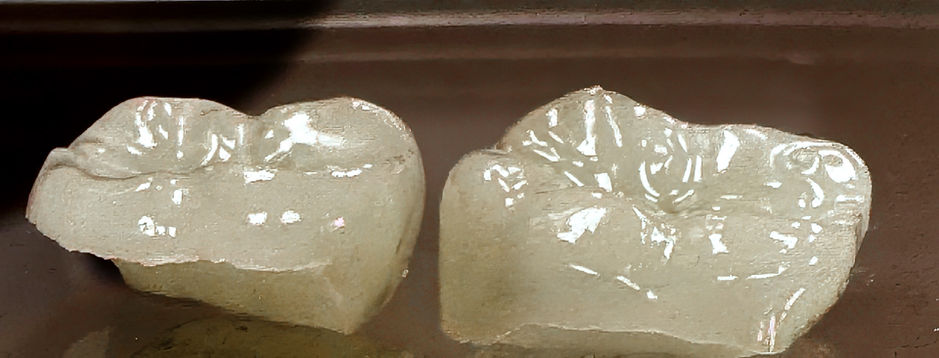
Dr.Feldman in collab with Cohen Elyahu
CROWNS
A crown is the type of restoration that completely covers the tooth. It is a tooth-shaped ceramic prosthetic piece made in the dental laboratory or by computer-assisted milling.
The crown is usually needed for a tooth with a Root Canal Treatment done.
The crown restores the function and aesthetic appearance of the fragile tooth.
DENTAL WHITENING
Whitening is now a widely proven technique that can effectively lighten natural teeth.
I use only safe, well-studied techniques with very few contraindications and that do not damage healthy dental tissue.
Teeth whitening gently removes discoloration from enamel and dentine using a gel based mainly on hydrogen peroxide and restores the radiance of your smile.
I also offer selective tooth whitening when only one tooth becomes darker due to trauma or a root canal treatment.
PROFESSIONAL ORAL HYGIENE AND PREVENTION
-
Personalised advice on brushing and maintenance techniques
-
Clinical exam, including taking X-rays
-
Dental Computer Tomography
-
Pit and Fissure sealing in children
-
Diagnosis of the tooth wear problems (erosion, bruxism, etc)
-
Impressions for whitening trays, night guards, and diagnostic study models
-
Periodontal and peri-implant maintenance
-
Ultrasonic and hand scaling under local anesthesia when needed
-
Polishing with the Air-flow system for selective removal of biofilm and discoloration from all tooth surfaces (Guided Biofilm Therapy)
-
Scheduling of individual follow-up appointments
-
Dietary advice relating to oral health
BECOMING AN INFORMED PATIENT

I believe every patient deserves to make well-informed decisions with confidence. That’s why I provide clear, comprehensive information so the patient can choose their treatment with peace of mind.
FIRST VISIT
The initial appointment with me will usually take from 30 to 45 minutes and consist of a comprehensive clinical exam of the teeth, gums, and soft tissue. I will take dental X-rays and intraoral images.
Why are dental X-rays critical?
Bitewings (BW) X-rays are foundational diagnostic tools used to reveal hidden cavities and failing fillings, and to assess bone level.
During the initial appointment, in addition to overall health conditions, I will review the oral care routine at home and dietary habits.
I explain the condition of the teeth in a simple yet detailed way, which is why I take the intraoral images, so the patient can see what I see.
CARIES TREATMENTS
Is there a difference between the terms “composite filling” and “composite restoration”?
Both terms refer to the same procedure for caries treatment.
The term “restoration” points to the final treatment result—a reconstruction of the tooth’s natural shape. Restorations take more time because they involve layering and sculpting techniques; however, they deliver beautiful results that combine function, aesthetics, and durability.
Restoring teeth to their natural shape is vital for maintaining proper chewing function and gum health.
Why is the cavity larger and deeper than it appears on a dental X-ray?
This is because X-rays are 2D images of 3D objects, meaning they cannot show the full volume of the tooth and often underestimate the true size of decay.
Why in some cases “small” cavities aren't actually small?
Not every dark spot on a tooth means decay. The problem is that stains and cavities can look surprisingly similar in the beginning.
This is why proper diagnosis matters before any treatment decisions are made.
Can I undergo dental treatment with a cold sore?
It is not recommended.
Active cold sores are highly contagious; they risk spreading the virus to your eyes or other parts of your face. Mouth stretching during treatment can cause the sores to crack, bleed, and delay healing.
Prevention is better than cure!
Prevent Tooth Decay: Brushing twice daily and flossing every day help remove plaque—the main cause of tooth decay.
Following a proper oral care routine significantly reduces the risk of new cavities and extends the lifespan of existing restorations, including fillings, crowns, veneers, and implants.
Have Fresher Breath: Regular brushing and flossing eliminate the bacteria that cause bad breath. Consistent oral hygiene helps you engage confidently in conversations with fresh breath.
Protect Gum Health: A strong oral care routine is essential to prevent gum disease (periodontal disease). Removing plaque and bacteria with a toothbrush and floss can reduce the risk of gingivitis and periodontitis, helping to preserve your gums and maintain the foundation of your teeth.
Your simple habits can lead to a healthier, brighter smile!
Dr. Clara Feldman D.D.S., Ph.D.
9A Diskin Str., floor 5, Jerusalem
To book your appointment: 054-5707057